
AnarchaServer
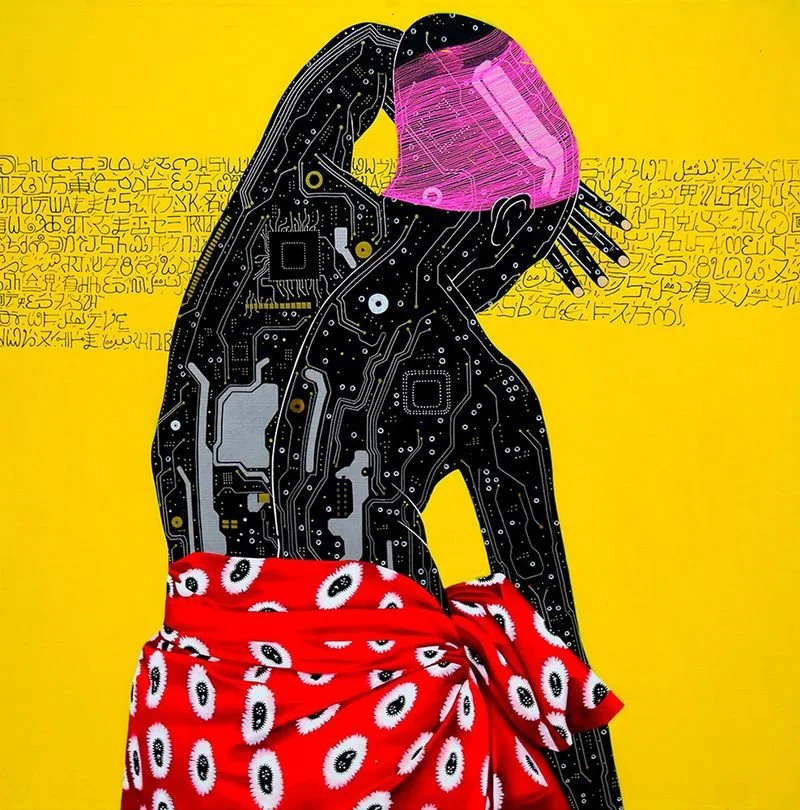
Source: AnarchaServer / Eddy Kamuanga Ilunga (Link)
Recognising that the internet as it stands is not safe for everyone, an informal group of feminists came together to bring their radical imagination to life through AnarchaServer. The initiative sought to centre human life at the core of technology and governance, while taking care to ensure that the data, work, and memory of feminists are better accessible, preserved, managed, and controlled in ways that promote the exercise of a full spectrum of freedoms and rights.
A feminist server that contributes toward the maintenance of autonomous infrastructure on the Internet for feminist projects, AnarchaServer is an open initiative that is moderated without losing sight of trust, consensus, agency and autonomy, and feminist collaboration. The initiative brings together civil society across the world. AnarchaServer was launched by the residents of Calafou and people involved in the TransHackFeminist Convergence, and focuses on hosting living, dead, and transitional data.
The beginnings
The initiative began in Calafou and now encompasses a vast community of feminists from Belgium, France, Germany, Greece, Iceland, The Netherlands, Mexico, Sweden, and Uruguay. The collective looks at technology as a mechanism that supports the exercise of rights, rather than oppression and suppression. The foundations are transfeminism, anticapitalism, and decolonial thought, and the goal is to build interspecies solidarity with other bodies, nature, and machines. They provide feminists with Blogs in the WordPress farm, encrypted file sending, encrypted paste-bin, standard poll and event scheduling, online surveys, a digital archive of feminist work, and a repository on cyberfeminism among other things.
The server was named after research conducted in 2013 by Klau Kinki (Gynepunk) on the decolonisation of the human body. This study led to the rediscovery of Anarcha’s story. An African American woman on the Wescott plantation near Montgomery, Alabama, Anarcha was enslaved. She went into labour and was in pain for three days. Dr J Marion Sims was called to assist the delivery. Later, in his autobiography, he admits to using forceps on the foetus’ head, even though he had little to no experience with using the instrument. While the fate of the baby remains unknown, Anarcha suffered severe vaginal tears during the birth. These injuries left her incontinent. Soon after, the one who enslaved Anarcha sent her to Sims in the hope that he would “repair” the damage, because her condition lowered her value as a slave. Sims took on the case rather reluctantly. He examined her and used a makeshift speculum by fashioning a pewter spoon and relieved the pressure that misaligned her uterus unintentionally. Following this, Anarcha became Sims’ test subject with the permission of her enslaver – and NOT her permission or consent. She was surgically operated 34 times, and on many occasions, without anaesthesia on the racist belief that Black people had higher pain thresholds. Sims continued experimenting on Anarcha, and two other enslaved women, Betsey and Lucy.
He came to be known as the “father of modern gynaecology,” but the women he experimented on were erased from history. They couldn’t maintain their own records as reading and writing for African Americans were forbidden and punishable by death.
AnarchaServer restores Anarcha’s memory and calls on us to never forget these truths.
Resisting systemic violence
Feminist servers are the perfect counter to the Techbro culture of move-fast-break-things. They seek to counter a range of challenges that come with navigating digital and online spaces – surveillance, censorship, gender-based violence, data extraction, and the targeting of dissent. Built on the foundations of slow political practices created and curated through informal networks of transfeminists, the initiative is all about crystallising feminist agency. By building autonomous infrastructures, AnarchaServer is committed to creating more autonomous infrastructure that ensure accessibility to, and preservation and management of feminist data, projects, and collective memory. The initiative places the freedom of expression at the heart of the struggle, and calls for collective care manifesting in the form of the contribution of shared knowledge, the creation of tools needed to keep voices accessible, as well as the space to innovate and create without such innovation and creativity coming at the cost of human well-being.
AnarchaServer’s commitment to agency and autonomy is evident in its creation of self-managed and autonomous servers to support more and more feminist initiatives in reclaiming control and building autonomy in how they access, store, and manage data and shared histories. These are journeys more than destinations, meaning that the iterations constitute a key part of an ongoing, growing engagement.
References
Lim, S. and Kuga, A. M. (2024). Feminist Server. https://ftx.apc.org/books/en-sexuality-and-internet-governance/page/feminist-server
Foster, E. K. (2020). "Critical Engagement within Hacker and Maker Communities", in DIY, Subkulturen und Feminismen, eds. Sarah Czerney, Lena Eckert and Silke Martin, Hamburg: Alma Marta. https://monoskop.org/images/5/55/DIY_Subkulturen_und_Feminismen_2020.pdf#page=18
Murray, P. R., Bagalkot, N., Shinde, S., Srivatsa, S., and Health Navigators, Maya Health (2022). "A ‘Feminist’ Server to Help People Own Their Own Data", The Bastion, New Delhi. https://thebastion.co.in/politics-and/tech/a-feminist-server-to-help-people-own-their-own-data/
