
Ashar (Ашар)
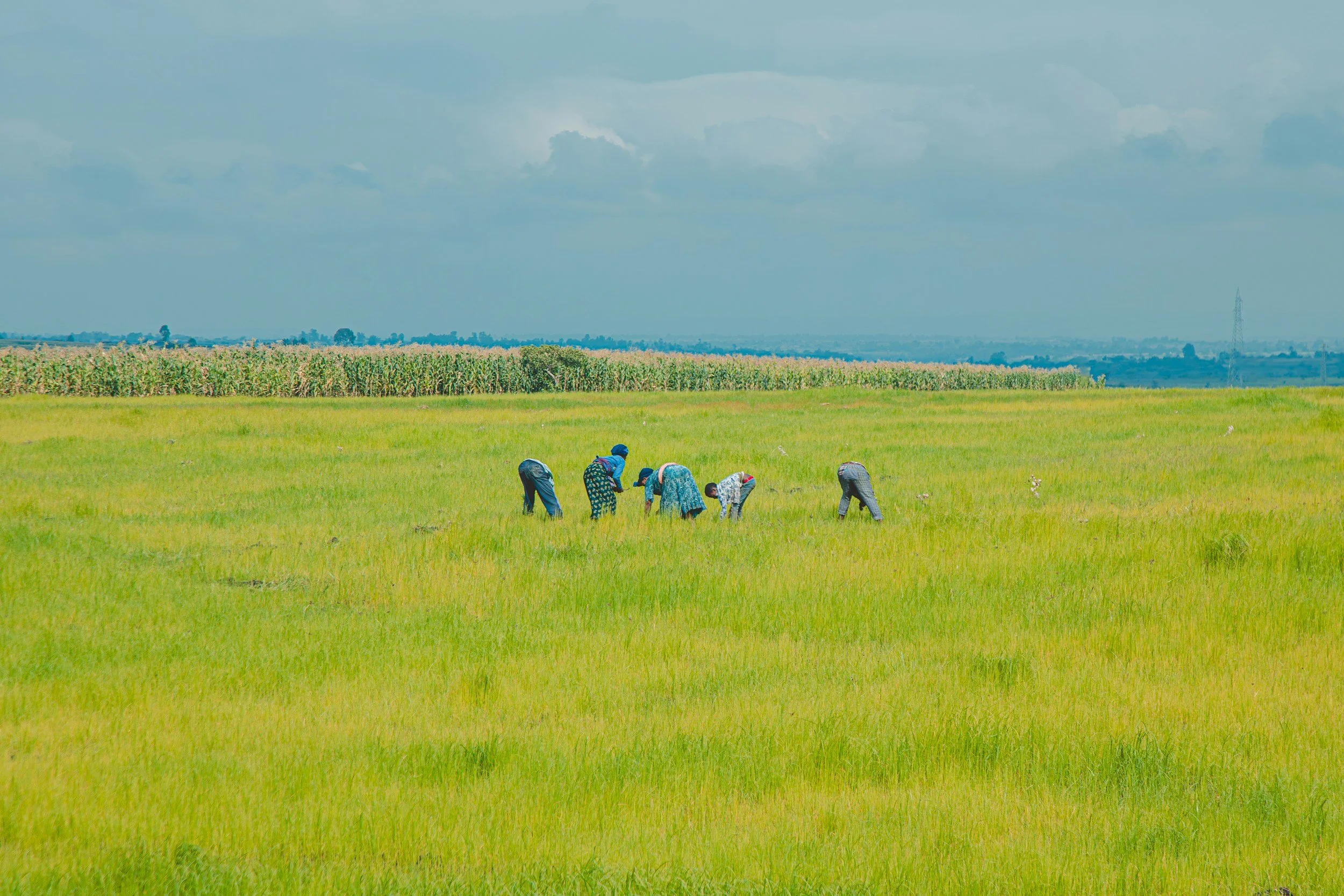
Most AI infrastructure, from data centres to algorithms, and from compute to networks, is built either by state governments or wealthy corporations, or both in collaboration. These infrastructures seldom acknowledge or centre the communities of people whose lives are affected by their creation and use. As a result, the impact of the infrastructure often produces harm without accountability. In some instances, communities are involved in the process through consultations that come in after critical decisions are made. As a result, there are few meaningful outcomes of such engagements. Ashar offers us a way to counter this mode of operation.
Before we proceed further, we want to state that Ashar is a living practice of collective labour and mutual aid, rather than a codified institution with a single authoritative definition. Ashar has survived through conditions of extreme political pressure, such as Soviet collectivization and the subsequent collapse of the Soviet Union in 1991. We draw on available literature and acknowledge that this literature is thin compared to the richness of the practice itself. Ashar has received significantly less academic attention than it deserves, and the accounts available in English are particularly limited. We also want to acknowledge that Central Asian communities and governance traditions have been systematically underrepresented in AI ethics and governance. Including Ashar in this archive is a small gesture toward correcting this imbalance. However, this effort is only meaningful if it leads to a genuine engagement with Central Asian communities in AI governance processes, not merely toward the citation of traditions by outsiders. We welcome deeper engagement and recognize that it is not ours to initiate alone or gatekeep. We welcome correction and deeper engagement from Kyrgyz, Kazakh, and broader Central Asian communities who carry this tradition and whose understanding of it is authoritative in ways that outside scholarship cannot replicate.
Understanding Ashar
In Kyrgyz and Kazakh rural communities, when a family needs to build a house but cannot do so by itself, such as when the elderly need their fields tended, when an irrigation canal needs clearing, when a school needs building because the state has failed to provide one, they lean on Ashar / Asar / Ume, or the practice of collective labor mobilization. Community members, ranging from relatives to neighbors to the broader village, gather to accomplish together what no individual household can manage alone. This effort is organized without any singular central authority and does not involve any monetary payment. Everyone who participates is simultaneously giving and receiving, as the same community that gathers today for one family’s need will gather tomorrow for another. Ashar stands for the reflection of community, where there is a concerted effort to help voluntarily. All work is done freely, without expectation of monetary reward.
Ashar is an ancient tradition that is rooted in the nomadic tribal system of the Kyrgyz people. Nomadic life made collective dependence a survival requirement rather than an ideology. It recognizes that community can provide security, food, and protection to their weakest members. Ashar institutionalizes this dependence into a practice of mutual support that has persisted well beyond nomadic life into contemporary Kyrgyzstan and Kazakhstan. The practice was particularly significant during the COVID-19 pandemic in 2020, when the Kyrgyz medical system was overloaded. Community volunteers organized hotlines, social media groups, and fundraising efforts that directly replicated Ashar. The Kyrgyz parliament has even debated using Ashar method to pay off state debt. The concept is also recognized as a response to modern institutional failures.
What Ashar Unsettles in AI Governance
Ashar presents AI governance with a model of infrastructure development that is radically distinct from both, state-funded and corporate-funded development. AI infrastructure, including data, models, compute, and networks, is currently built through either massive corporate investment or, to a lesser extent, government funding. Both models concentrate control. Where corporate infrastructure serves shareholders, government infrastructure serves state interests. Neither is accountable to communities in the direct, immediate, reciprocal way in which Ashar demands. Ashar offers a third possibility, where AI infrastructure is built through genuine community contribution, governed by those who build it, and directed toward the needs of those who participated in its creation.
Open-source AI development, community-owned broadband networks, data cooperatives, and participatory AI projects all carry elements of Ashar. However, they typically lack Ashar’s insistence on genuine mutuality, that those who contribute also govern, and that the benefits of the collective effort are returned to the community in a form that is directly useful rather than mediated through market mechanisms. AI governance shaped by Ashar insists that communities that contribute data, labor, or infrastructure to AI development have not merely rights to compensation but also rights to governance in the form of genuine authority over how the collective resource is used and how its benefits are distributed.
Ashar models something important about the relationship between individual contribution and collective benefit. No one can claim that a project is theirs because they contributed more than anyone else. The house belongs to the family that lives in it. The canal belongs to the community that uses it. The harvest feeds those who planted. This stands in direct opposition to the intellectual property regime that governs AI development, in which the company that aggregates contributions from thousands of sources claims ownership of the resulting model. Ashar suggests a different principle: that the aggregation of community contribution creates community property, and that governance must reflect this.
References
Cima, O., & Sovová, L. (2022). The end of postsocialism (as we knew it): Diverse economies and the East. Progress in Human Geography, 46(6), 1369-1390.
E-history.kz. (2025). Asar – tradition of the joint collaborative labor. https://e-history.kz/en/news/show/6909
Otto, J., & Wechsung, F. (2014). Self-Governance and Sustainable Common Pool Resource Management in Kyrgyzstan. Sustainability, 6(2), 700–724. https://doi.org/10.3390/su6020700
Zikos, D. (2020). Revisiting the role of institutions in transformative contexts: institutional change and conflicts. Sustainability, 12(21), 9036.
