
Rāhui
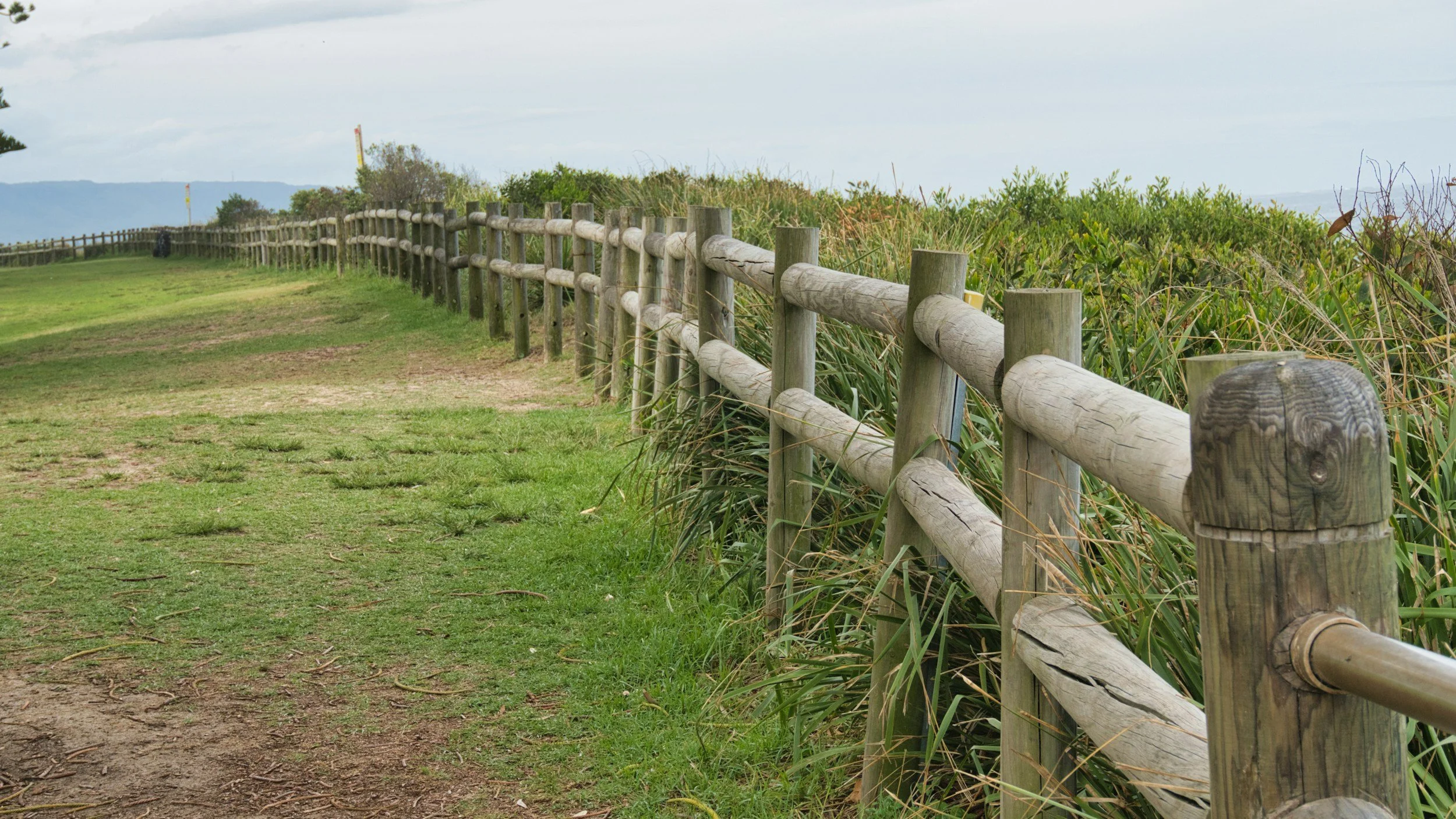
With AI tools being bundled into platforms and services on which people are already members or engaged at different levels, opting in has been the default setting, instead of the process of seeking consent. This means that the default is use, rather than restraint. AI governance in its current form offers no pathway for a community, group, or individual to say that the deployment of the technology is delayed until the unit in question is ready for it, finds a need for it, and turns to it on their own terms. The principle of Rāhui offers us exactly this.
Before proceeding, we want to state that Rāhui is a living governance institution practiced across Polynesia, specifically in French Polynesia, Aotearoa New Zealand, the Cook Islands, Hawaiʻi, and across the Polynesian Triangle. It is known by various names and includes within its fold variations in practice and authority across different islands and communities. We draw on the work of scholars and practitioners from across the Polynesian world to document Rāhui in this archive. We acknowledge that Rāhui is a living community practice whose authority rests with the communities that hold it, and we welcome correction and deeper engagement from Polynesian communities and scholars who carry this tradition.
Understanding Rāhui
In the village of Teahupo’o in Tahiti, famous globally for its extraordinary surf break, the community’s revival of rāhui as a practice endures as a powerful approach to engaging with the world. Local fishermen began noticing that target species were becoming smaller, less abundant, and harder to find. They placed a Rāhui, or a sacred prohibition on harvesting from designated marine territories for a specified period. The sea was closed and the decision to reopen was to be made only after the same degree and extent of community deliberation.
Rāhui is best defined as a temporary, community-enacted prohibition on the harvesting of natural resources from a designated territory. It denotes the state of being marked, restricted, or set aside because of the presence of mana, or a spiritual and political power. Rāhui is not the same as regulatory closure in the sense of a prohibition by law, but rather is a sacred enactment of community authority over a resource territory, a declaration that the sea, forest, or lagoon is resting, and that entry to it during that rest is a violation not only of community law but of the spiritual order that Rāhui expresses.
The governance architecture of Rāhui is community-initiated and not state-imposed. The decision to place a Rāhui belongs to the community whose livelihoods depend on the resource. It is time-limited but renewable, meaning that the closure ends when the community decides the resource has recovered and not on the whims of an administrative schedule. It covers specific territories and specific species and is meaningfully tailored to suit local ecological knowledge. Rāhui is an assertion of ownership and responsibility, as the community that enacts a Rāhui is asserting that this resource territory is theirs to steward and that the terms of access to it are theirs to determine.
What Rāhui unsettles in AI governance
Rāhui inverts the burden of proof in resource governance, and this inversion is its most important contribution to AI governance. In current AI regulatory frameworks, the default is deployment. An AI system can be released and operated unless a specific harm is demonstrated and a specific regulation is triggered. The burden of proof lies with those who would restrict the use of the system. Communities that do not want a surveillance system, a predictive policing tool, or an automated welfare system deployed in their environments must demonstrate harm before they can stop it, often well after the system is already operating. Rāhui proposes the opposite: the default is restraint. The territory is closed. Deployment requires the community’s affirmative decision to lift the Rāhui and to say that the resource is ready and the conditions for access have been met.
This inversion would transform AI governance. It would place the burden on developers and deployers to demonstrate that a community is ready to receive a technology, not on communities to demonstrate that they are harmed by it. It would make community consent not a consultation requirement but a condition precedent. Without affirmative Rāhui-lifting by the community, no deployment. It would recognize, as Rāhui does, that communities have the right to say ‘not yet’ or ‘not here’ for their own reasons, without the burden of having to meet a legal threshold for harm because the authority to decide rests with the community, not with the regulator.
The ecological wisdom embedded in Rāhui is also directly applicable to AI’s resource consumption. Polynesian communities placed Rāhui on fisheries when they observed that species were becoming smaller and harder to find, when the evidence of over-extraction was visible in the behavior of the resource itself. The communities most affected by AI’s data extraction, whose behavioral data trains models, whose creative work populates datasets, whose communities are rendered legible to systems they did not request, are observing exactly the same kind of depletion: a diminishment of privacy, of trust, of the social fabric that makes community life possible. Rāhui governance would give those communities the authority to close the territory when they observe that depletion, without requiring them to produce a harm assessment first.
References
Bambridge, T. (2016). The Rāhui: Legal Pluralism in Polynesian Traditional Management of Resources and Territories. ANU Press.
Kevin. (2017). From Lāhui to Rāhui: Community Stewardship across Polynesia. https://kuahawaii.org/lahui-to-rahui-polynesia/
Tuuhia, T. (2023). Rāhui and the Ancient Art of Marine Conservation. https://reasonstobecheerful.world/rahui-marine-conservation-french-polynesia/
This article draws from the living governance tradition of Rāhui as practiced across the Polynesian world. We are grateful to the communities of Teahupo’o and other Polynesian villages who are actively reviving this practice, and to the scholars at the Rāhui Forum and Research Center in French Polynesia whose documentation of the tradition has made wider engagement possible. We invite readers to support Polynesian marine conservation initiatives and Indigenous-led resource governance programs that sustain Rāhui on its own terms.
