
Sumak Kawsay
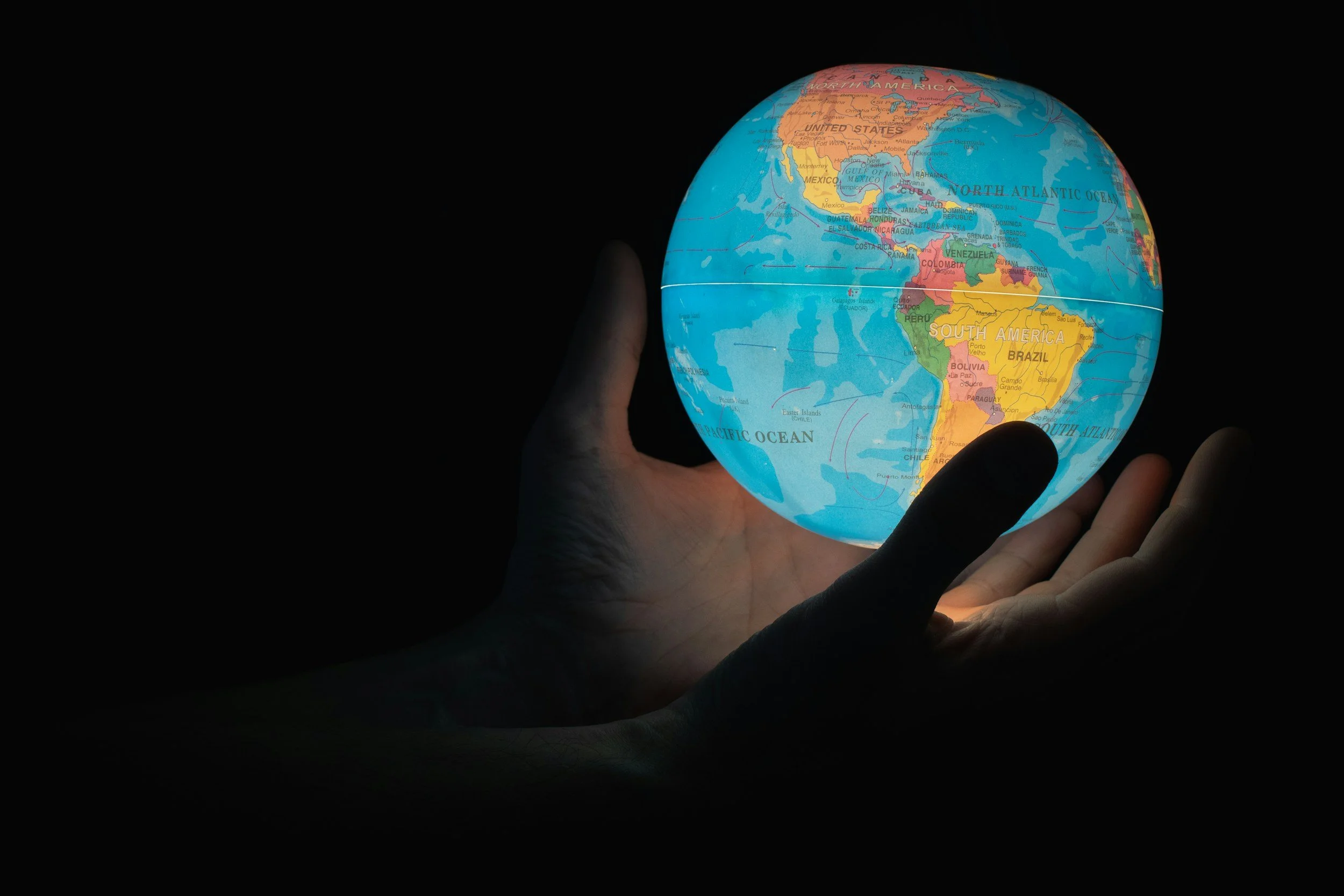
Before proceeding, we want to name something. We acknowledge that there is an irony in extracting a concept that opposes extractivism and putting it to work in a governance document. We sit with that tension rather than resolve it. Sumak Kawsay is a living philosophy, rooted in ongoing struggles for land, sovereignty, and dignity. This piece draws from the living knowledge systems of the Quechua people and related Indigenous communities of the Andes. We are not from these communities, and we do not speak for them. What follows is our attempt to learn from and point toward a tradition that we believe has something important to say to AI governance, while also recognizing that the act of doing so carries its own risks of flattening or appropriating what we are trying to honor. We hold that tension openly, and we welcome correction.
The entire AI lifecycle has been associated with environmental harm, with the extraction of resources, water use, and land appropriation being the foremost among the harm caused. These harms are being felt, most often, by communities that have been historically marginalised and excluded, while the benefits from the technology continue to be out of access to them. One guiding principle that invites us to think deeply about the impacts of AI, and can be a pivotal value to lean on in AI governance, is Sumak Kawsay, or Buen Vivir.
A concept rooted in the worldview of the Quechua people of the Andes, Sumak Kawsay has been defined by scholar Eduardo Gudynas (2011) to a mean community-centric, ecologically balanced, and culturally sensitive approach to life. Sumak Kawsay is the diametric opposite of the extractive ways of capitalism, and centres the value of coexistence in diversity, in harmony with nature, and in oneness with and within community. Unlike “well-being,” which is centred on the individual oftentimes at the cost of the community, the subject of Sumak Kawsay, in Gudynas’ words is “the individual in the social context of their community and in a unique environmental situation.”
The concept finds resonance with the belief systems of the Aymara and Guarani people of Bolivia, the Quichua of Ecuador, Achuar of Ecuadorian Amazon, Guna of Panama, and the Mapuche of Chile and Argentina. It was adopted by the government of Ecuador, under the Spanish name, Buen Vivir. In essence, it refers to the “ideal and beautiful fulfilment of the planet” (Melià, 2015).
Shifting away from extractivism
Capitalism and market economics prioritize extractivism and occupation – the appropriation of resources by the wealthy few in pursuit of profiteering, which goes hand-in-glove with divorcing the individual from the collective, and prioritizing individual rights. Moving away from this, Sumak Kawsay calls for prioritizing the rights of communities and nature over those of individuals (El Telégrafo, 2013).
It considers humans a part of Mother Earth. It comprises five key pillars (El Telégrafo, 2013): There is no life without knowledge or wisdom We all come from Mother Earth Life is healthy Life is collective We all have an aspiration or a dream In the Andean conception, it implies striking a balance between feeling well and thinking well, which ultimately results in doing well (Rivadeneira Nuñez, 2013). It is based on relationality, reciprocity, and connection. According to the concept, individual human beings are not owners of the earth and its resources, but are only stewards. In Gudynas’ words, this approach acknowledges that the environment and human capital are not interchangeable in the way capital is (Gudynas, 2011).
In effect, it is also important to keep market thinking at bay, for it is unacceptable to think of education as an investment, but rather as a route to enlightenment. In Sumak Kawsay’s call for putting a stop to endless capital accumulation, it becomes a powerful alternative to what we know as “development” today (Rivadeneira Nuñez, 2016). Indigenous communities have made use of the principle to define and affirm an alternative to capitalism, in line with cosmological, holistic, and political dimensions (Lang, 2022).
What Sumak Kawsay unsettles in AI governance
Political economy helps unpack the nexus between production and trade, and the law and the government. Most technological advancements in the world have been some or the other degree of reliance on extractivism. Historically, colonies were depleted with the extraction and export of their resources by colonial powers, and their economies were dumped with mass produced goods at astronomical prices.
Similar realities abound with AI in the present, where technology has been built with data taken from the majority world (rarely with consent), as well as the water, land, and mineral resources from the majority world. With the end of World Wars II, cocacolonization took over, with liberal politics and capitalistic economies establishing overconsumption and extractivism as the norm. These approaches also came to define international relations and foreign policy. Techno-optimist and techno-solutionist engagements are built on this cultue of overconsumption.
Shifting away from the extractivist format of engagement at the international level, AI Governance can learn and practice the value system professed by Sumak Kawsay. Gudynas notes that Sumak Kawsay “helps us see the limits of current development models and it allows us to dream of alternatives that until now have been difficult to fulfil” (Balch, 2013). He also identifies eight core ideas for the concept (Gudynas, 2011), namely:
Creating space to share critiques of development
Uplifting ethical outlooks grounded in values
Centring decolonization
Fostering intercultural dialogue
Denying the nature-society binary
Rejecting manipulative and instrumental rationalities
Rejecting linear understandings of progress
Expressing feelings and affections.
What would ai governance informed by Sumak Kawsay look like?
Sumak Kawsay is inherently related to the notions of interculturalism and decolonization – and they do not exclude other kinds of world visions (Baldi, 2013). For AI Governance, Sumak Kawsay offers a powerful corrective to the dominant paradigm that evaluates AI mainly for its ability to generate efficiency, profit, and individual utility.
Sumak Kawsay doesn't ask whether your AI system is harmful. It asks whether the very frame of 'AI governance', with its language of risk, compliance, and utility, is itself an extractivist project. It would invite us to ask fundamentally different questions around AI:
Does this technology strengthen or erode reciprocal relationships between communities and their environments?
Does it serve collective well-being or concentrate benefits in the hands of a select few?
Does it respect the interdependence of human and non-human systems?
Does it make room for collective well-being?
What is the ecological footprint of this technology and what kinds of harm ensue from its use?
Is there community consent for the development, deployment, and use for this technology?
Who is benefited from this technology and in what ways? At whose cost do these benefits emerge and what does this cost look like?
These questions call on us to push the boundaries of AI governance beyond mere technical and legal compliance, toward an active, ethics-based engagement in relational accountability. Practitioners at the intersection of Sumak Kawsay and information technology call for attention to socioinformatics, which is the study of the interdependence between technology and nature (Maldonado & Córdova-Pintado, 2026; Wulf et al., 2018).
Sumak Kawsay asks us to recognize that human beings are not isolated, atomized creatures, but are complex individuals with complex social relationships – the reduction of a whole human being to a datapoint for optimization means the erosion of community.
As Cesar Augusto Baldi noted, Sumak Kawsay calls for “…an entire way of life: (a) a community as a form of basic social organization; (b) a form of political organization, which comprises internal authorities, regulation of those authorities, the resolution of internal conflicts, and the creation of deliberative bodies; (c) an economic model, which stems from the tenet that everything is a part of nature (human beings, land, water, air, animals, rocks, etc.). It is therefore a civilizing project that goes against the principle of dominating nature and people and exploiting resources to the point of exhaustion” (Baldi, 2013).
Most forms of systemic and structural violence continue to prioritize the anthropocentric approach, which has led us to normalize multiple ways of divisiveness and discrimination. Sumak Kawsay offers guidance in countering violent interruptions by colonialism and capitalism (Macas, 2011). It pushes back against linear narratives of progress, and instead, calls on us to reject instrumental rationalities and the nature-society binary. It extends an invitation to govern AI as a practice of communal life rather than as a tool of development.
Rather than a “framework” for governance, Sumak Kawsay presents us with a mirror. What do we see when we hold it up to the AI systems we are building and to the governance conversations we are having about them?
References
Gudynas, E. (2011). “Buen Vivir: Today’s tomorrow”. Development. 54 (4): 441–447. http://link.springer.com/10.1057/dev.2011.86
Melià, B. (2015). “El buen vivir se aprende”. Sinéctica (in Spanish) (45): 1–12. http://www.scielo.org.mx/scielo.php?script=sci_abstract&pid=S1665-109X2015000200010&lng=es&nrm=iso&tlng=es
El Telégrafo (2013). “¿Qué es el Sumak Kawsay?”. El Telégrafo (in European Spanish). https://www.eltelegrafo.com.ec/noticias/columnistas/1/que-es-el-sumak-kawsay
Rivadeneira Nuñez, G. (2013). “El Sumak Kawsay en Sumpa, Santa Elena”. La Línea de Fuego. Rivadeneira Nuñez, G. (2016).
“Sumak Kawsay – Esplendida Existencia – Buen Vivir” http://condesan.org/mtnforum/sites/default/files/comments/files/SUMAK%20KAWSAY-Guadalupe%20Rivadeneira.pdf
Lang, M. (2022). “Buen vivir as a territorial practice. Building a more just and sustainable life through interculturality”. Sustainability Science. 17 (4): 1287–1299.
Balch, O. (2013). Buen vivir: the social philosophy inspiring movements in South America. https://www.theguardian.com/sustainable-business/blog/buen-vivir-philosophy-south-america-eduardo-gudynas
Baldi, C. A. (2013). Sumak Kawsay, Interculturality and Decolonalization. https://criticallegalthinking.com/2013/04/15/sumak-kawsay-interculturality-and-decolonialization/
Macas, L. (2011) “El Sumak Kawsay” (PDF). Decrecimiento y Buen Vivir. https://decrecimientoybuenvivir.files.wordpress.com/2011/01/sumak-kawsay-luis-macas.pdf
Maldonado, M., & Córdova-Pintado, D. (2026). Indigenous ethics and artificial intelligence. AI and Ethics, 6(1), 70.
Wulf, V., Pipek, V., Randall, D., Rohde, M., Schmidt, K., & Stevens, G. (Eds.). (2018). Socio-informatics. Oxford University Press.
NOTE:
This article draws from the wisdom, practices, and life work of Indigenous groups. While educating ourselves on Indigenous worldviews is important, we understand that these can also contribute to and enable appropriation. As part of our ongoing attempts at practicing accountability, we invite readers to consider making a donation to Quechua Benefit or Awamaki, or any other Quechua people’s organizations or initiatives to support the lives and work of people from the Quechua community.
