
Ma
The entire lifecycle of AI, including both the technology itself and its governance, is centred on production. The race to innovate has meant that more and more people want to be part of the AI journey, producing newer tools, upscaling and augmenting existing tools, and building more products on those foundational tools. The race to regulate has meant that more and more documents and policies are presented, some often repeating each other. Ethics boards are publishing principles, researchers are releasing papers, developers are shipping models, and users are presenting assets and outputs built using these tools. The entire machinery, it appears, is oriented toward production and output. No governance mechanism or process has engaged with, or is even structurally capable of asking a key question: Is the next thing needed at all?
Offering a meaningful counter to this state of affairs is the Japanese concept of “Ma,” or meaningful pause.
Before proceeding, we want to acknowledge that Ma is deeply embedded in Japanese aesthetic, philosophical, and spiritual life, and is expressed across music, architecture, poetry, theatre, calligraphy, design, and martial arts. It is not a single doctrine with a single custodian, rather, it is a sensibility that is woven through Japanese culture in ways that vary by art form, region, and practitioner. We draw on the philosophical dimensions of Ma that have been articulated by Japanese architects, musicians, and scholars. Translating Ma into a governance framework does risk precisely the kind of noise-making that Ma resists. We offer this piece as an invitation to sit with the concept rather than deploy it in haste. We welcome correction and deeper engagement from those who carry this tradition.
Understanding Ma
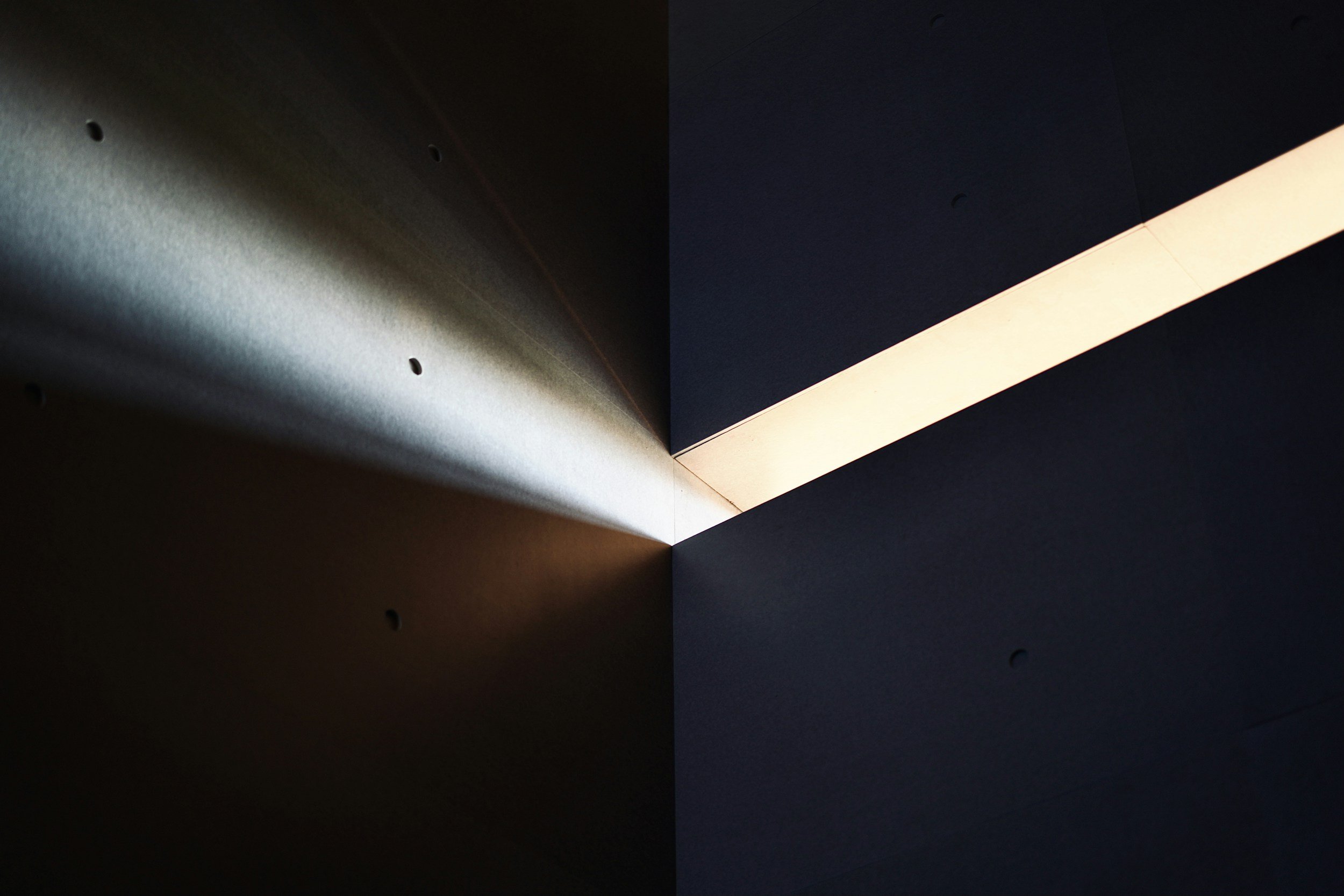
Ma is often translated as negative space, a pause, or gap. However, these translations only capture a part of what Ma truly and fully describes. It is a place, space, and void, but not an absence of something. Ma is generative emptiness. It is full because of the relationship between the container and what moves through it. Ma is the space without which that relationship wouldn’t be possible.
In Japanese aesthetics, Ma appears across forms: the pregnant pause, the moment of absolute stillness, and the interstice that hangs between two stages of action. Without the emptiness, the objects flanking it collapse into nothing. This space allows for ideas to register genuinely, and for feelings to surface wholesomely in response. It is fundamental to the Japanese spiritual experience, as it invites one to experience emptiness as a ground for all fullness.
What Ma Unsettles in AI Governance
AI governance operates in a culture of continuous production that treats any attempt at a pause either as an outright failure, or as a weapon to gatekeep market share. Regulatory timelines are structured as emergencies. Ethics review processes are timed constraints. Impact assessments are filed away and left on a shelf without actioning any finding meaningfully. The underlying assumption is that the purpose of governance is to enable action by removing obstacles. The job is assumed finished when the framework is published, or when the audit is complete, or when the license is granted. Ma tells us that this assumption deserves interrogation. What if governance might require genuine intervals of non-doing as an active cultivation of space where understanding can arrive?
Ma invites us to ask if we should be building an AI tool at all, and to sit with the discomfort that this question can surface. It asks us to recognise the meaningfulness in a pause that moving-fast-and-breaking-things cannot offer. Within this, the offer from Ma is one of meaningful friction in the face of rapid productivity. Ma thus challenges the speed at which AI systems move from research to deployment. The interval between demonstrating capability and deploying it at scale has compressed to months or weeks. Within this compression, the spaces in which communities may have room to genuinely deliberate on what they want and do not want, disappear. Ma insists on creating this interval deliberately as a structural commitment to the stillness in which so much more than a developer’s intention can speak.
Ma carries a specific challenge to AI’s relationship with data. The assumption of AI development is that more data is better, and that the gap between what a model knows and needs to know should be filled as fully as possible. Ma tells us to remember that data cannot fill all that lives within the gaps, as some forms of understanding are possible only in silence, in the absence of input, and only when the system is not processing something. Communities that are most affected by AI systems do not experience their lives as datapoints in need of completion. They experience them in the intervals between events.
References
Isozaki, A. (1980). Ma: Space-time in Japan:[exhibition]. Cooper-Hewitt Museum.
Maki, F. (1964). Investigations in collective form. Washington University.
Miyazaki, H. (2021). Starting Point: 1979-1996. VIZ Media LLC.
Nitschke, G. (1988). Ma: Place, space, void. Kyoto Journal, 8(10).
Pilgrim, R. B. (1986). Intervals (" Ma") in space and time: foundations for a religio-aesthetic paradigm in Japan. History of Religions, 25(3), 255-277.
